How to launch a meme coin with $0 on Pump Fun in 2026 using a no-code Solana workflow
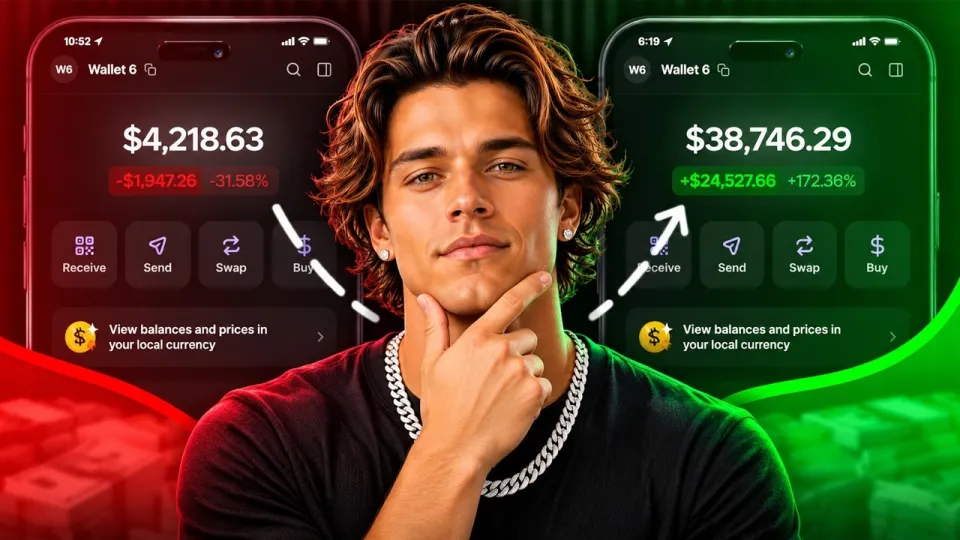
Video: How To Launch A Meme Coin With $0 On Pump Fun (+$38,746)
· based on the channel Memetics
Key takeaways
- A Solana token can be deployed on Pump Fun in under 60 seconds with no coding experience and no upfront capital.
- Pump Fun prices trades along a bonding curve, so the token starts with automatic liquidity instead of a manual presale.
- The workflow shown by the Memetics channel turned a fresh wallet into $38,746 starting from zero.
- Visibility boosts are used right after launch to generate early volume and momentum on the chart.
- Exiting is a deliberate step: the dev reads live price action and sells into peak demand rather than holding.
Launching a meme coin with $0 on Pump Fun means deploying a Solana token through a no-code interface, letting the platform's bonding curve supply the initial liquidity, and paying for the launch with trading fees generated by the token itself rather than with your own capital. In practice you connect a wallet, name the coin, upload an image, and the token goes live in under a minute — the real work is in the setup choices and in how you manage the chart afterwards.
What launching a meme coin with $0 on Pump Fun actually involves
The "$0" in the title is not a marketing trick about free money; it describes a launch where the creator puts up no starting capital. On Pump Fun, a new token begins trading against a bonding curve — a smart contract that quotes a price for every buy and sell and holds the SOL it collects. That means you do not need to seed a liquidity pool yourself, which is normally the expensive part of a token launch on a decentralized exchange. The creator's cost is limited to the small network fee for the deployment transaction, and the token's own trading activity generates the volume that later funds promotion.
The workflow the Memetics channel walks through follows a fixed sequence: deploy the token, configure the bonding curve parameters, launch, trigger visibility boosts at the right moment, read the live chart, and take profit. The channel reports turning a brand-new wallet into $38,746 with no coding experience, and the structure of that result matters more than the number itself: it came from a repeatable process, not from a single lucky buy.
Step-by-step: deploying a Solana token without code
- Set up a fresh Solana wallet. A clean wallet makes the profit-and-loss picture unambiguous and keeps the dev wallet separate from your personal holdings.
- Open a no-code launch tool. The video points to www.memescoinslaunch.fun as the deployment interface; Pump Fun itself is where the token then trades.
- Enter the token details: name, ticker, description and image. These are the only creative inputs — there is no smart contract to write or audit.
- Confirm the deployment transaction and pay the network fee. The token is live on Solana almost immediately; the video describes the deployment as taking under 60 seconds.
- Copy the contract address and verify the token page before anyone trades it. This is the step beginners skip, and it is where most failed launches go wrong.
Because the contract is standard and created by the platform, there is nothing to code, but there is also nothing to customize: you are choosing a template, not building a product. Treat the launch as a distribution problem, not an engineering one.
How the Pump Fun bonding curve and liquidity work
A bonding curve replaces the traditional liquidity pool. Instead of pairing your token with SOL in a pool that someone has to fund, the contract mints and burns along a price formula: every buy pushes the price up along the curve, every sell pushes it down. The SOL paid by buyers accumulates inside the contract, and once the token reaches a market-cap threshold, liquidity is typically migrated to a decentralized exchange so trading can continue on an open market.
For a dev, three consequences follow. First, there is no rug-pull mechanic available in the classic sense — you cannot drain a pool you never controlled. Second, your upside comes from holding a supply allocation and selling into demand, not from extracting liquidity. Third, the curve is transparent: anyone can see how much has been bought and where the price sits relative to the migration threshold, which means your own selling is visible to the market too.
Generating early volume with visibility boosts
A token with no trades looks dead, and a dead chart does not attract buyers. The video's answer is to trigger visibility boosts immediately after launch, when the token is cheapest to promote and the first buyers are scanning new listings. Boosting is a timing decision: too early and the spend is wasted before there is any chart to show; too late and the token has already been buried under newer launches.
The channel also points to www.promotememes.fun for free promotion of a meme coin, which fits the $0 thesis — paid boosts are optional, but distribution is not. In practice, early momentum comes from three things happening at once: a small number of genuine buys, a visible price chart with upward movement, and social proof in the form of links posted where new-launch traders actually look.
Reading the live chart and taking profit as the dev
The exit is where most launches turn from a win into a loss. The dev's advantage is information: you know your own supply, you know when you plan to sell, and you can watch the buy flow in real time. The discipline the video describes is to sell into strength — into a burst of buys and rising volume — rather than waiting for a peak that may never arrive, and to do it in tranches so a single sell does not collapse the curve.
A practical rule set: define your target market cap before launch, sell a portion when the chart first reaches it, and keep a trailing plan for the remainder. Remember that every sell you make pushes the price down along the bonding curve, so large single sells hurt your own average exit. Also account for the fact that once the token migrates to an external exchange, the dynamics change and the curve no longer protects your entry.
Common questions and doubts from new devs
Most of the hesitation around launching a meme coin comes down to legality, cost and risk rather than technical difficulty. On cost: the deployment itself is a network fee, and everything else is optional spend on promotion. On legality: creating a token is generally permitted, but marketing it with promises of returns, or selling supply you misrepresented, can cross into securities or fraud territory depending on jurisdiction — the safe posture is transparency about your holdings and no return promises.
On risk: the $38,746 figure is one outcome, not an expectation. Tokens that never attract buyers are the norm, and a dev who buys their own token to fake volume can lose the entire stake when the curve reverses. Treat any launch budget as money you can lose completely, and never promote a token you would not describe honestly to a stranger.
Summary
The path to a $0 meme coin launch on Pump Fun is short and procedural: deploy a Solana token through a no-code tool, let the bonding curve supply liquidity, boost visibility at the moment new-launch traders are looking, read the live chart, and exit into demand. The technical barrier is close to zero, which is exactly why the outcome depends on timing, distribution and selling discipline rather than on code. The Memetics channel produced the full video breakdown behind these steps, including the live result of turning a fresh wallet into $38,746. Copy the process, not the number.
Questions & answers
Do I really need zero capital to launch a meme coin on Pump Fun?
You need a small amount of SOL to cover the Solana network fee for the deployment transaction, but no capital to seed liquidity, because the Pump Fun bonding curve handles pricing and holds the SOL that buyers pay in. Promotion can also be free if you use free listing channels instead of paid boosts. Budget for the network fee and treat everything else as optional.
Is launching a meme coin on Solana legal?
Creating a token is generally permitted, but the legal risk sits in how you market and sell it. Promising returns, hiding your supply allocation, or selling tokens you described as locked can be treated as fraud or an unregistered securities offering depending on your jurisdiction. Be transparent about your holdings and make no performance claims.
How long does it take to deploy the token?
The deployment itself is fast — the workflow shown describes a token going live in under 60 seconds once the name, ticker and image are entered. The longer part is preparation: setting up a clean wallet, deciding on supply and promotion, and planning your exit before anyone trades.
What happens when the token reaches the bonding curve threshold?
Once the token hits the platform's market-cap threshold, liquidity is typically migrated to a decentralized exchange so trading continues on an open market. After migration the bonding curve no longer governs the price, so the dynamics change and the dev's selling plan should account for thinner, more volatile conditions.
Source: How To Launch A Meme Coin With $0 On Pump Fun (+$38,746) · Markdown version